
Internet marketing is a good inexpensive way to reach your target market with out using the old school ‘in-your-face’ ad strategy. It allows customers and clients to find what they’re looking for without annoying popups or aggressive tactics. Lets face it, we all have been there, looking for services or products that we need but some marketing strategies of certain companies are so disruptive that we give up before we find what we are looking for. If you have a business website and you are trying to reach your target market, internet marketing can help you achieve that market. First, you want to start with a goal. This is vital. You have to know where you want to go, and what success will look like for your business, before you can head down the internet marketing road. Then you have to figure out who exactly you are maketing to as well as your promotion strategy. Promotion is more effective if you plan when you publish your products or services. To learn more Call (678) 457-7939 or visit us online today at https://www.eis2022.wpenginepowered.com #EIS #ElegantImageStudios #InternetMarketing #SEO #BusinessGoals
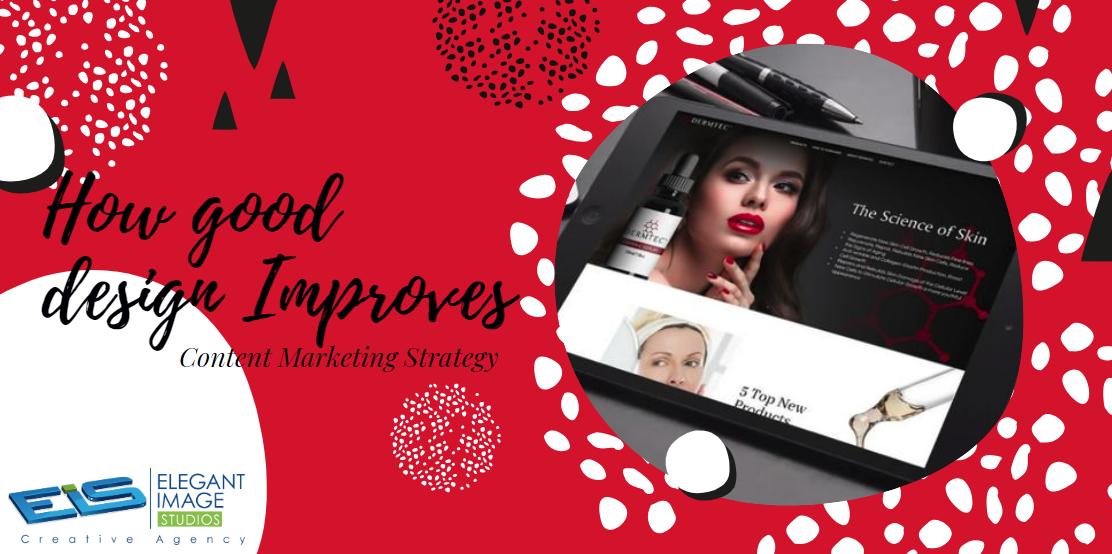
If your small business is trying to leverage social media for marketing, you’re probably struggling to build a large, engaged audience. You’re not alone. Every 60 seconds there are 293,000 new posts and 136,000 new photos posted on Facebook alone. Businesses need to leverage every strategy and tactic they can to effectively market on social media. One of the most important strategies: investing in good design to amplify your content marketing strategy. Here are five proven ways good design can amplify your content marketing strategy. Good design is memorable Good design builds brand recognition Strong visuals perform better than text alone Good design effectively uses limited space Images attract more clicks, retweets, and likes Good design is memorable As we wrote in Why Good Design is More Important Than Ever for Your Business: People have a very short attention span. In fact, according to a Princeton University study, snap judgments count. The study found after seeing a face for only 1/10th of a second people formed opinions about that person. Judgments were made on attractiveness, likeability, and trustworthiness, and prolonged exposure to that face just reinforced the initial impression. With the incredible amount of content the average user encounters on social media, first impressions and snap judgments play an important role. Research has found the attention span of the average adult has dropped to a mere 8 seconds. When you have so little time to catch the attention of social media users, good design becomes even more critical. Good design builds brand recognition Colors, type, imagery, and layout contribute to the visual essence that makes up a brand. These things are also vital components of good design. Think about ways to incorporate elements from your brand in your content marketing. Whether it’s a splash of color, the use of your corporate typeface, or an element from your logo subtlety integrated into the background of an image, there are many ways you can add your brand in without overwhelming the content. For more on logo design, give us a call today at (678) 457-7939. People remember visuals better than text Scientists have found that people’s ability to recall images is dramatically better than remembering text alone. They even coined a cool name for this phenomenon: the Picture Superiority Effect. Inc. magazine explains: It works like this: If you hear information delivered verbally, you are likely to remember about 10 percent of that information three days later. Add a picture, however, and your recall rate will soar to 65 percent. Put simply, visuals matter—a lot. “Human PSE is truly Olympian,” writes molecular biologist John Medina in Brain Rules. “Tests performed years ago showed that people could remember 2,500 pictures with at least 90 percent accuracy several days post-exposure, even though the subjects saw each picture for about 10 seconds. That kind of recall is even more critical when you consider the deluge of content people scroll through every day on social media. Incorporating images with good design is a powerful way to extend your brand. For example, if you’re showcasing your products on social media, be sure that you have strong packaging design (the physical packaging for your products) and package graphics (the graphics, including images and content, on the packaging) so that your products stand out. 74% of social media marketers use some visual asset in their post and marketing, and 37% of marketers said that visuals were their most important form of content. Only blogging rated higher. Good design effectively uses limited space According to recent studies, an incredible 80% of the time on social media is spent using mobile devices. This is a problem for communicating with customers and prospects because post and image sizes on many social media sites are quite small: Instagram posts are resized to 612 pixels by 612 pixels. Facebook and Twitter feed images end up just over 500 pixels wide. Good design can help boost your content when you’re working with a limited amount of space. How something is organized visually and how well it’s perceived is primarily informed by psychology and how our brains interpret what we see. Less can be more. Good design encourages sharing Marketing studies reveal a staggering statistic: the average American is exposed to around 5,000 advertisements and brands per day. Only twelve ads leave an impression. Want to be like those twelve impressive, spotlight-stealing brands? You need a practical, attractive design. When consumers are faced with deciding between a wide array of choices – all things with similar features or benefits – they go with the one that they either recognize or the one that has a more pleasing design. For example, images attract more clicks, retweets, and likes According to research conducted by Buffer (a social media tool we use and like), tweets with images received 150% more retweets than those without any images. Customers aren’t the only ones that agree good design helps companies on social media platforms. 60.8% of marketers said that in 2017,the design was essential to their marketing strategies. 93% agreed that it was very important. By leveraging good design, you can ensure that your content marketing efforts won’t be another momentary blip in your customers’ endless social media stream. Article from: https://www.websitemagazine.com/blog/how-good-design-improves-content-marketing-strategy
Tired of looking at your computer for hours trying to create graphics and posts for your business’s. internet marketing? Need someone to handle your social media marketing as well as blog posts etc. so you can relax or have more time with your family? We’ve got you covered. Call (678) 457-7939 or visit us online today at www.eis2022.wpenginepowered.com #EIS #ElegantImageStudios
Social media marketing is an area which seems to divide businesses. Some companies embrace it, invest in it, and generate fabulous returns from it, whilst other businesses are pensive, scared and unwilling to get online and start competing via social. The early adopters of blog marketing, for example, are way, way ahead of their industry competitors. Trying to catch up a thought leader is a virtually impossible task, after all. But, some are still unwilling to invest in social media. There are also those companies getting online and making a hash of it, then claiming social media marketing doesn’t work for them – even though, with the right guidance, their products and services could have successfully been marketed via social media engagement. The four types of social media marketing mistakes I see most often are: * We don’t have time This type of social media marketing failure masks a bigger problem – any business not committing time and energy to marketing its products and services is asking to be taken out of business. Particularly with more companies getting involved in effective social media engagement to drive traffic, increase loyalty and increase sales. Solution – create dedicated time for consistent social media marketing, or outsource it to a trusted professional consultant. * We’re dipping our toes in This type of social media marketing failure is common: businesses doing a bit of social media engagement, the odd tweet, a sporadic blog post now and then. Then, three or four months later, they’ll exclaim in a disgruntled fashion that social media didn’t work for them. In the words of Yoda – ‘Do Or Not Do, There Is No Try ‘especially when it comes to social media marketing. Solution – invest in social media management workshops and social media training, to create effective strategies. * We’re having a go at it This type of social media marketing failure is common among small businesses and solo entrepreneurs. The hapless, untrained, uneducated DIY-ers, jumping onto social media platforms and trying to deliver successful social media engagement without any knowledge, training or professional guidance. Would you ask a trainee Doctor to ‘have a go’ at heart bypass surgery for you? Solution – same as above, invest in professional consultancy to make sure your social media marketing is achieving results. * We don’t have the budget This type of social media marketing failure is on the increase and comes from the assumption that social media engagement comes for free. Obviously, as with any other well-planned, strategic, effective marketing activity, it takes time, energy, investment, and cold, hard cash. A business not investing in social media marketing is losing customers to competitors online. Solution – allocate budget to social media marketing and start taking the online revolution seriously, before it’s too late. Article from: http://www.40billion.com/post/71687#23
Cross-Promote to Build Your Audience Email marketing and social media have a symbiotic relationship. When marketers incorporate links to social media in their email campaigns, they can help increase follower count and engagement across social platforms. Similarly, tweeting or posting links to email sign-up forms can help build mailing lists. It’s become a standard practice for brands to incorporate share icons for Facebook, Twitter, Instagram and LinkedIn into their email headers and footers. These make it easy for audiences to share links to articles or follow a brand on social media with a simple click. More creative ways of integrating the two forms of communication include uploading email subscriber lists to Facebook and Twitter, or creating sign-up forms within social media sites to collect email addresses directly from social media pages. Another fun way to encourage customers to follow brands’ social media pages is to offer an incentive — for example, creating a private, password-protected Facebook or LinkedIn group for “top tier” members. Each channel can, and should, serve as a referral source directing existing consumers to additional channels for continued engagement. Back to Basics: Use Social Media to Catch Users’ Attention and Reach New Audiences Consumer attention spans are shorter than ever before, and marketers should always look for new ways to stay relevant in today’s cluttered, fast-paced and oversaturated market. Personalizing email lists through segmentation based on demographics or location is one great way to catch customers’ attention. Marketers can also use snappy social media posts to capture the interests of those not subscribed to their brand’s mailing list, whether it’s through interactive Snapchat filters, witty Tweets or Instagram giveaways. The key benefits to marketers using social media are expanded reach and heightened brand awareness. Every demographic has different preferred ways of interact- ing with their favorite brands. A survey by Campaigner found that 44 percent of millennials still prefer receiv- ing information about brands through email. However, there’s no denying that social media has a large presence in consumers’ minds. By using social media platforms to extend email marketing reach, marketers have a better chance of connecting with prospects more often. Find the Right Fit: Use Platforms That Best Match Brands’ Content Using the right platforms for a brand can help skyrocket the effectiveness of a marketing campaign. Companies with more visual products will benefit most from taking advantage of Pinterest’s layout. For example, florist shops can use the platform to showcase displays of the day, and photographers can use Tumblr or other visual blogs to present their portfolios. On the other hand, airlines or other customer service-focused businesses can capitalize on Twitter for sharing rapid-fire responses or updates on delayed flights. Leverage each platform’s strengths to drive home messaging points your brand wants to get across. Remember that email allows for bigger pieces of content to be delivered to a user’s inbox, while social media can be used for sharing smaller, bite-sized snippets in the form of teaser pages, links to articles or sneak peaks. Set Realistic Expectations: Remember that Success Doesn’t Happen Overnight One hurdle marketers face when integrating social media is setting expectations too high or too low. Some view it as a tool that will dramatically increase revenue, while others fail to see the value in adding it to their marketing strategy. The real answer lies somewhere in between. Social media programs need time to be cultivated and exist as part of an overall marketing strategy, but to succeed expectations must be set correctly and efforts must be applied based on those outlooks. Don’t underestimate the power of integrating social and leveraging different platforms for different content, and remember to keep brand consistency in mind. Think of social media and email marketing as two different — but complementary — tools to use, as opposed to two siloed channels. By using a variety of social media platforms that align with the brand, marketers can expand their brand’s reach to new audiences and stay connected with loyal existing customers as well. Keep these tips in mind to create a stronger and more effective marketing strategy. Article from: https://www.websitemagazine.com/blog/integrate-social-media-into-email-campaigns
Are you just getting started with a social media strategy for your business? Not sure what you should be posting about in order to generate followers and engagement?
Social media advertising has been under attack the past few months (years) and for good reason – the “controls” placed on brands and developers have been lax at best and the most rogue among them have capitalized upon this “hands-off” attitude and approach – and you certainly can’t blame them.

How to Turn a $500 Budget Into a Successful Facebook Ad Campaign When done right, Facebook can be a key tool in promoting your small business—even on a limited budget. With new updates on a nearly daily basis, it can be overwhelming trying to take advantage of all the features Facebook offers. Through its Ads Manager program, you have the ability to gain more followers, likes and impressions on a post, and even direct people right to your own homepage. While traditional advertising avenues are limited for the budget-conscious marketer, social media advertising can stretch even a $500 budget a long way with some careful thought to these four considerations: 1. Know your audience You can get a thousand likes on a post, but if none of those Facebookers care about your company, was that ad successful? This is where quantity vs. quality comes in to play. While both have their time and place— to drive real sales and profits from these ads, you need quality engagement. This starts with building the right audience. One of the most powerful tools Facebook Ads Manager provides you with is its targeting capabilities. Your company has a specific demographic and your targeted Facebook audience can reflect those details. Narrowing all the way down to age, gender, job title, zip code and even what kind of pages they already like are all ways Facebook gets your post where it needs to be. Before you even begin boosting posts, take a look at your existing audience. If your follower count is lacking, consider using $100 out of that budget toward getting new followers that meet your target demographics. 2. Thumb-Stopping Visuals The next time you’re going down your Facebook feed and your thumb stops scrolling, take note! Why did that specific post jump out at you? Maybe it was an eye-catching video or just a cute baby picture. Whatever the reason, that post got you to stop and look at it. Keep these visuals in mind when creating your own ads because we usually look at a picture before reading the accompanying description. Avoid stock photography if possible as it can make your ad appear generic. Try capturing your own compelling images or videos, or consider creating original infographics with a program like Canva to get noticed. 3. What’s the Point? With a smaller budget, it’s necessary to be a little picky when it comes to choosing the content you want to sponsor. Upcoming promotions/events, fun pictures and original resources/infographics are all great options to put some dollars behind. Once you settle on that post, it’s time to choose what you want to get out of it— Post likes? Clicks to your website? Video views? When you’re building your ad, keep these options in mind. 4. Test & Measure This final step is the most important when it comes to maintaining and improving the success of your ad campaign. Keeping an eye on what you’re promoting, what you’re spending and the results you’re seeing can help you evaluate how to move forward. See that infographic you boosted for $30 is getting a ton of likes? Add another $20! If it’s not broke, don’t fix it— there’s a reason why people are responding, you have an awesome post, spread it around! See a post isn’t doing so well? Scrap it and make a new one. Social media is all about trying things out and adjusting in real time— don’t be afraid to try new things and experiment. Social media advertising can appear intimidating at first, but it provides marketers with great opportunities. Learning how to make the most of advertising on social platforms like Facebook can help truly elevate your marketing efforts, no matter the budget. Article from: https://www.websitemagazine.com/blog/get-some-bang-for-your-social-buck
Social media marketing refers to the process of gaining traffic or attention through social media sites.
Social media marketing refers to the process of gaining traffic or attention through social media sites.
